
Stephan Erasmus | Reconstruct at NIROXprojects.
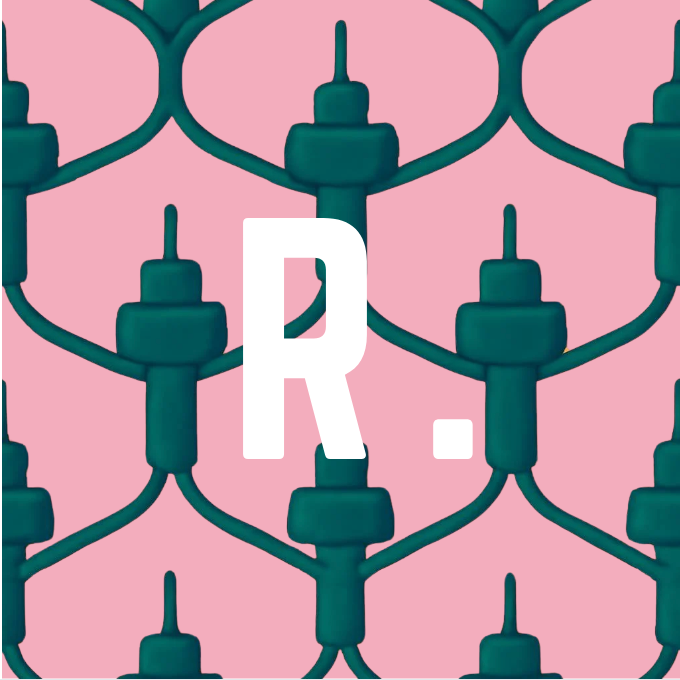
re·con·struct tr.v. re·con·struct·ed, re·con·struct·ing, re·con·structs 1. To construct again; rebuild. 2. To assemble or build again mentally; re-create: reconstructed the sequence of events from the evidence. 3. To cause to adopt a new attitude or outlook: a diehard traditionalist who could not be reconstructed. In Stephan Erasmus’s work structure plays an important role with particular focus on the encryption process. In preceding exhibitions he has used encryption systems as structures to turn the selected text into visual love letters addressed to an ever changing muse. In these exhibitions the focus was placed on the final structure as it relates to the muse this can clearly be seen in works from ‘Hartland’ where the final image in some way referenced the manifestation of the muse: the landscape, creating a direct link between the muse as Gaia. In ‘Hartland’ Gaia manifests as South Africa and the exhibition explores the artists relationship with the country as muse, sometimes as a lover and at other times as a rejected and ridiculed lover. ‘Reconstruct’ departs from the muse as the main character as seen in the previous exhibitions. In this exhibition Erasmus continues exploring the act of writing love letters through the sampling of existing text and transforming the text into two dimensional and three dimensional objects. The act of writing love letters into artworks remains a central point around which Erasmus constructs his work. However, the focus moves away from the muse as the intended reader of the love letters, in a form that resembles the muse, and focus of his production is shifting to the act of writing and the encryption of the love letters, where the letter becomes a pattern, an object that entraps the reader/muse. It has been suggested by Nick Cave at a series of lectures that the act of writing love letters can be equated to the binding of the recipient to the writer. Cave speaks of the act of writing as a ‘magical act’ of weaving a web and trapping the beloved in the web, binding the recipient to the writer. In ‘Reconstruct’ Erasmus continues to encrypt selected sections of existing text taken from love songs and poetry. In this body of work the text becomes an incantation to bind the muse to the words. For Erasmus the act of writing/weaving/reconstruction of the text becomes the focus. The process of encryption becomes in a very physical sense the weaving or the building of a web that would entangle the reader. Stephan Erasmus is a Johannesburg based artist. Contact: Neil Nieuwoudt T: +27 72 350 4326 E: neil.nieuwoudt@gmail.com Stephan Erasmus, entitled Reconstruct (20 October – 06 November). Reconstruct opens on...
X FEST – THIS WEEKEND AT THE BIOSCOPE
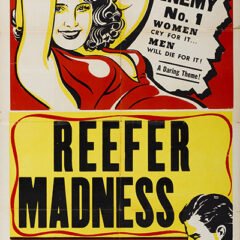
From the collaboration that has brought you the successful HorrorFest, and Sound On Screen. Flame Drop Productions and The Bioscope proudly present this special selection of films from previous X Fest events held in Cape Town. With a fun mix of comedy, documentary, and the far out imagination of Harmony Korine, X Fest fest is certainly a one of a kind festival. PROGRAMME The documentary TATTOO NATION. Harmony Korine’s TRASH HUMPERS. Stoner classic REEFER MADNESS & Sexploitation gem PERVERT! WATCH TRAILERS + BUY...

Call for proposals 2014!
The Goethe-Institut is known worldwide for promoting intercultural engagement through fostering dialogue and exchange in the arts. GoetheOnMain was developed by the Goethe-Institut South Africa and launched in May 2009 at Arts on Main in Johannesburg as a non-commercial, artist-run project space – an exceptional free platform in a city where cultural spaces are either commercially or governmentally managed. The multi-disciplinary GoetheOnMain has since hosted a wide range of exhibitions, workshops, events and performances; including visual art, literature, film, music, dance, and theatre projects. The way in which project selection takes place is central in understanding the philosophy of GoetheOnMain. In order to create an unbiased and open platform, the programme is decided by an independent committee of arts professionals, who meet after the yearly public call for proposals. Projects are invariably hotly debated. The focus above all else is on artistic quality, whilst maintaining a sensitivity for the context and local relevance, and favouring an experimental approach. The GoetheOnMain space itself also implies a certain conceptual frame – that of the city, or a sense of ‘urbanity’: a focus on the human relation as much as built environment. Previous projects at GoetheOnMain have dealt extensively with politics of space, noting the stratified city, gentrification, issues of access, and a loss of the ‘center’ so typical of many world metropolises, but also of the personal as political – focusing on private narratives, identities, eccentricities, and broader global issues affecting the city dweller. Project realisation: March to December 2014 Deadline for submissions: 15 August 2013 Send your proposals here:...

Experimental project space opens in downtown Jozi
GoetheonMain is opening tonight as part of the Arts on Main development in downtown Johannesburg. The 273 m2 space is intended as a multi-disciplinary project room, tonight’s launch will feature Isicathamiya and Oswenka performances and a photo projection of Sabelo Mlangeni’s new body of work Men Only, which will be followed on 8 to 10 May by the Informal Architecture master class – an architecture workshop on the structures that fills the gaps left by city planning. Ismail Farouk’s Trolley Works, the first of eight projects chosen by an independent jury, will open on 29 April. Opening Night: Mai Mai goes Main Isicathamiya and Oswenka Performances & Men Only – a photo projection of Sabelo Mlangeni’s new body of work on the George Goch hostel When: 8 May, 6 pm Where: GoetheonMain, Arts on Main, 245 Main Street (Closest corner Berea Street), City & Suburban, Johannesburg. From May onwards GoetheonMain will host eight projects selected from the open call for proposals that was launched in early March. The process will be repeated later in the year and is set to run twice a year. The distinguished jury consisting of Paul Grootboom, Sibongile Khumalo, Melissa Mboweni, Simon Njami and Hans-Georg Knopp met to decide the projects to be realised at GoetheonMain this year. The chosen proposals are reflective of the multi-disciplinary nature of GoetheonMain and the urban space that surrounds it. Art outreach project Sutherland Reflections; city intervention Trolley Works; a music and dance performance entitled Trespassing Permitted; visual art exhibition dedicated to Women’s day; Rhythm Tap. Multimedia Dance Project; a performance piece Fragile and Selogilwe; interdisciplinary presentation Merry Christmas Minister!; as well as Red Arts photography presentation and literature workshops, found the judges’ favour. With GoetheonMain, the Goethe-Institut engages with issues central to metropolises all over the world, and in particular Johannesburg. Through an engagement with the arts, urbanity is looked at: the hybridity, frenetic energy and constant transformation that make up our cities. Informal Architecture Master Class When: 9 & 10 May Despite the UN-Habitat’s call for “cities without slums” pronounced in 1999, the number of informal settlements has drastically increased. Similar ambitions are expressed closer to home: In South Africa housing lists dating back to 1998 demonstrate that formal approaches to housing delivery are not effective enough. The informal city fills the gaps left by what the formal city does not and cannot provide. Yet it is largely condemned and outlawed – its potential hidden. 26’10 south Architects has, in partnership with the Goethe-Institut, embarked on a research project to gather information in the form of mappings and drawings which capture the spatial and functional qualities of...
We will be back!